.png)
Webflow development agency
Available for Q2
Modern, scalable Webflow Development for fast-moving teams.
We translate strong UI designs into fast, scalable, and clean Webflow systems that your team can confidently manage and grow.

50+
Projects delivered across industries
3x
Faster Campaign Launches on average







Our Webflow development approach
For a fast, performant and a scalable website
Component-first, always
Built from reusable components, not one-off pages so your team can edit and scale without breaking things.
Framework-driven development
We work across major Webflow frameworks, with Lumos as our go-to for scalable, flexible systems.
Built for performance and scale
Built to scale with complex CMS, dynamic content, and real-world traffic demands.
SEO and AEO ready by default
Structured, semantic, and scalable, supporting both search and AI discovery.
Webflow development
engineered as a scalable system
4-5 Weeks Delivery
Full Redesigns
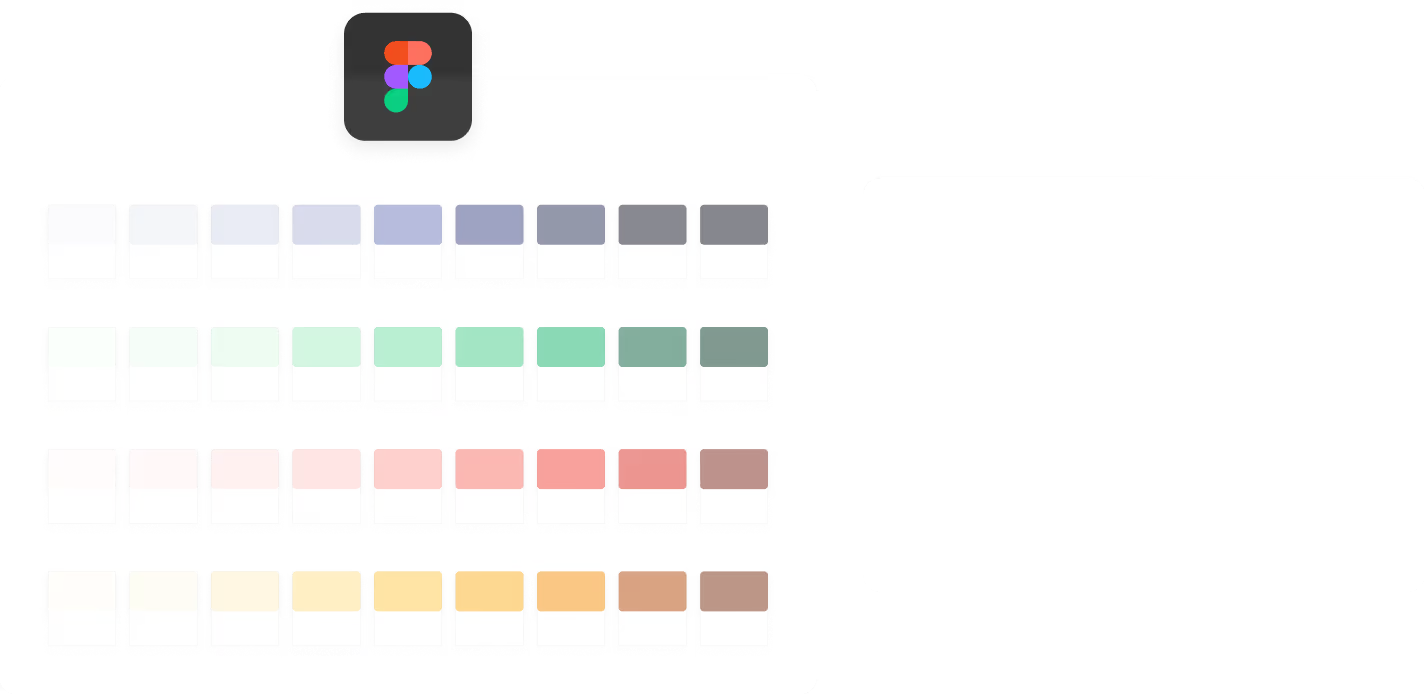
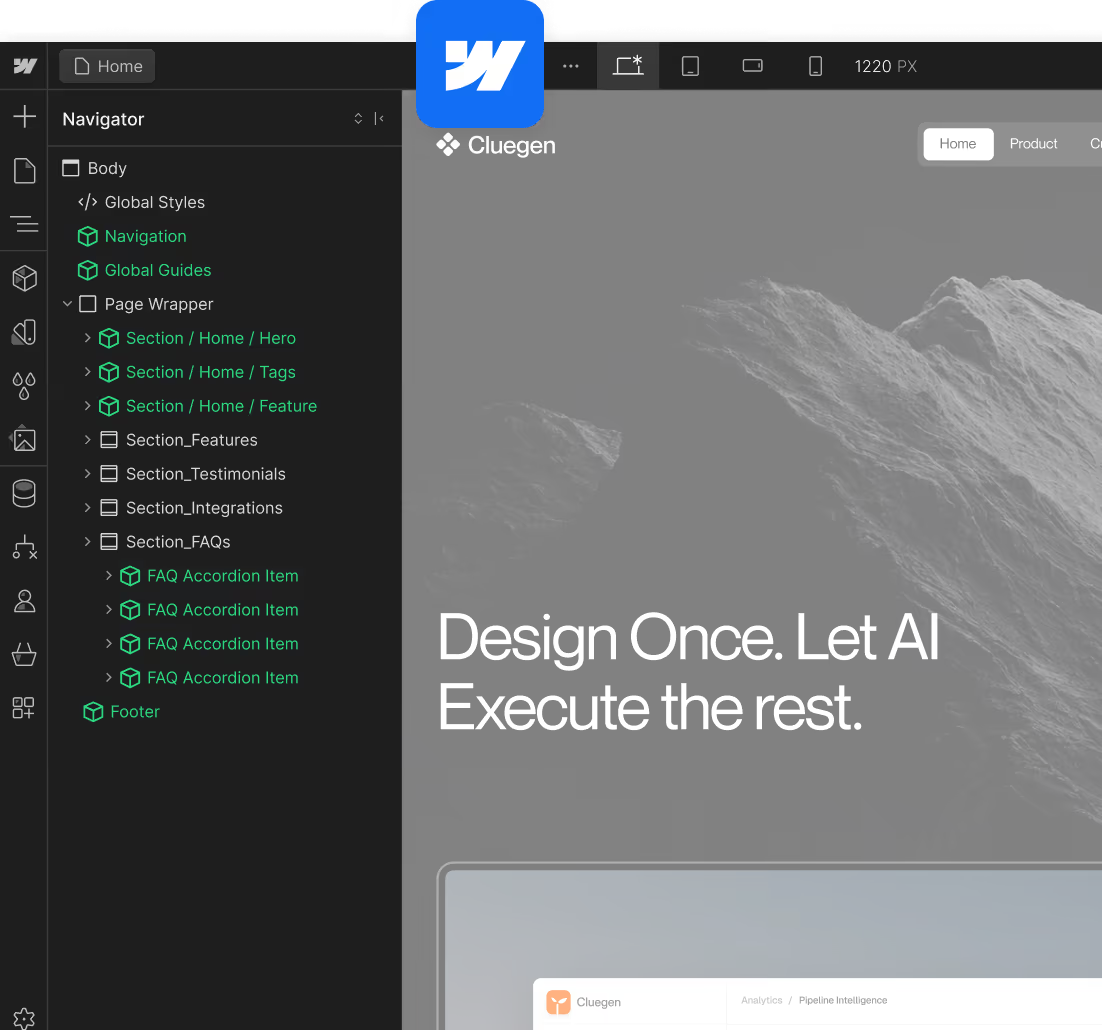
Taking your Figma design system and rebuilding your entire site on a solid Webflow development foundation ensuring consistency, performance, and scalability from day one.
2-3 Weeks Delivery
Interactions & Motion
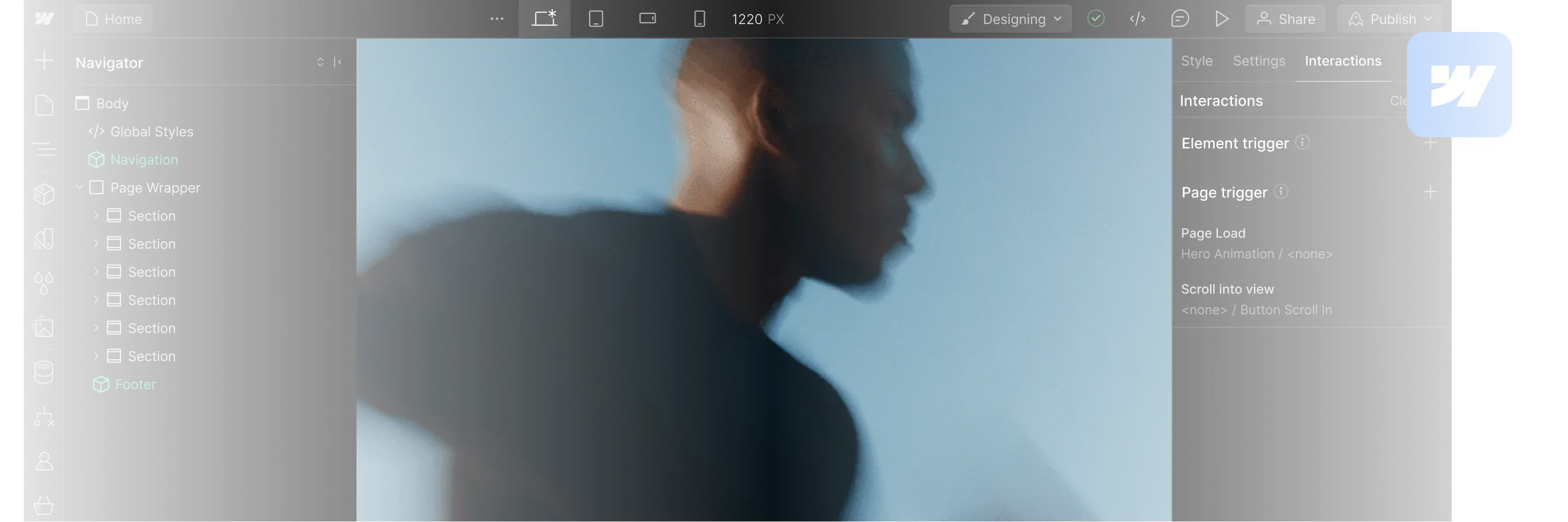
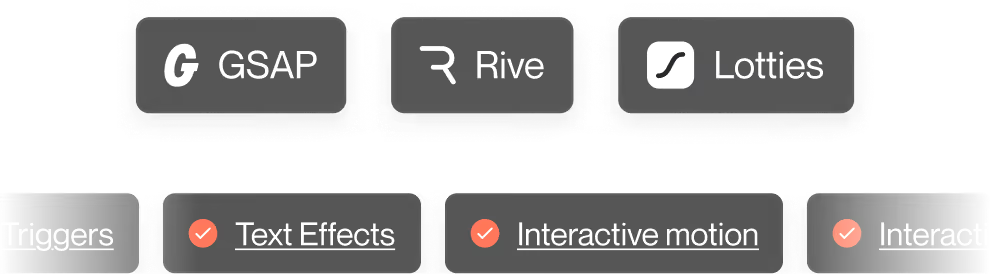
GSAP, Lottie, dotLottie, Rive, and Webflow-native interactions implemented with performance in mind, ensuring smooth motion, minimal overhead, and consistent behavior across devices
8-12 Weeks Delivery
Platform Migrations
We help teams move from WordPress, Squarespace, or custom stacks to Webflow resulting in cleaner architecture, and better performance.
2-4 Weeks Delivery
Integrations & Workflows
HubSpot, Airtable, Memberstack, analytics, tracking, automation stacks (Make, n8n), and more, set up cleanly.
2 Weeks Delivery
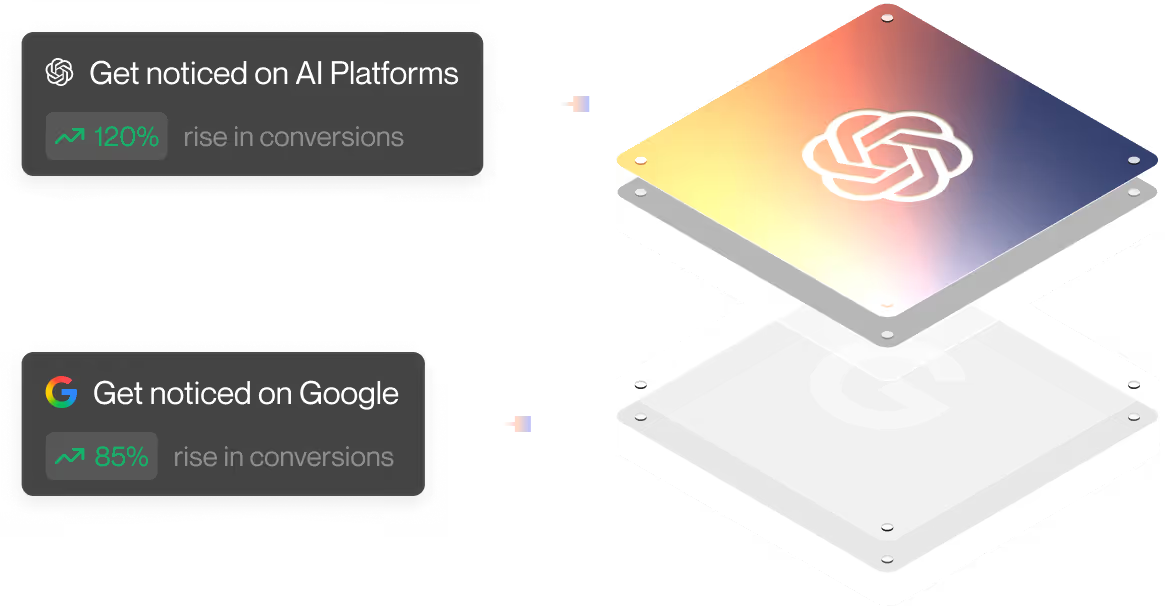
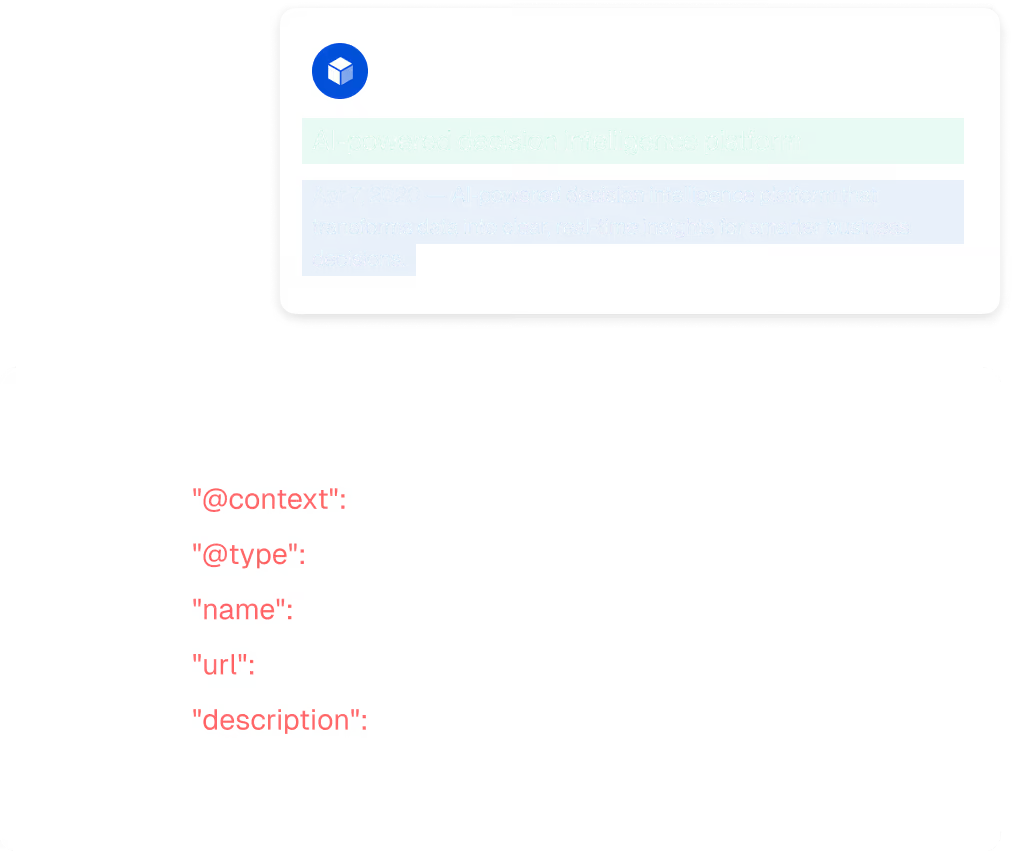
SEO and AI-Search Ready Foundations
Strong semantics, clean content structure, schema markup, and the correct patterns for modern AI platforms and search ensuring your content is discoverable, understandable, and future-ready
2-4 Weeks Delivery
Custom Code & Backend Logic
Small reactives, API hooks, gated flows, webhooks, structured scripts, and anything else your product requires
4-5 Weeks Delivery
Performance Improvements
Refactoring heavy builds, optimizing media, cleaning classes, fixing cumulative layout shift, and improving page speed
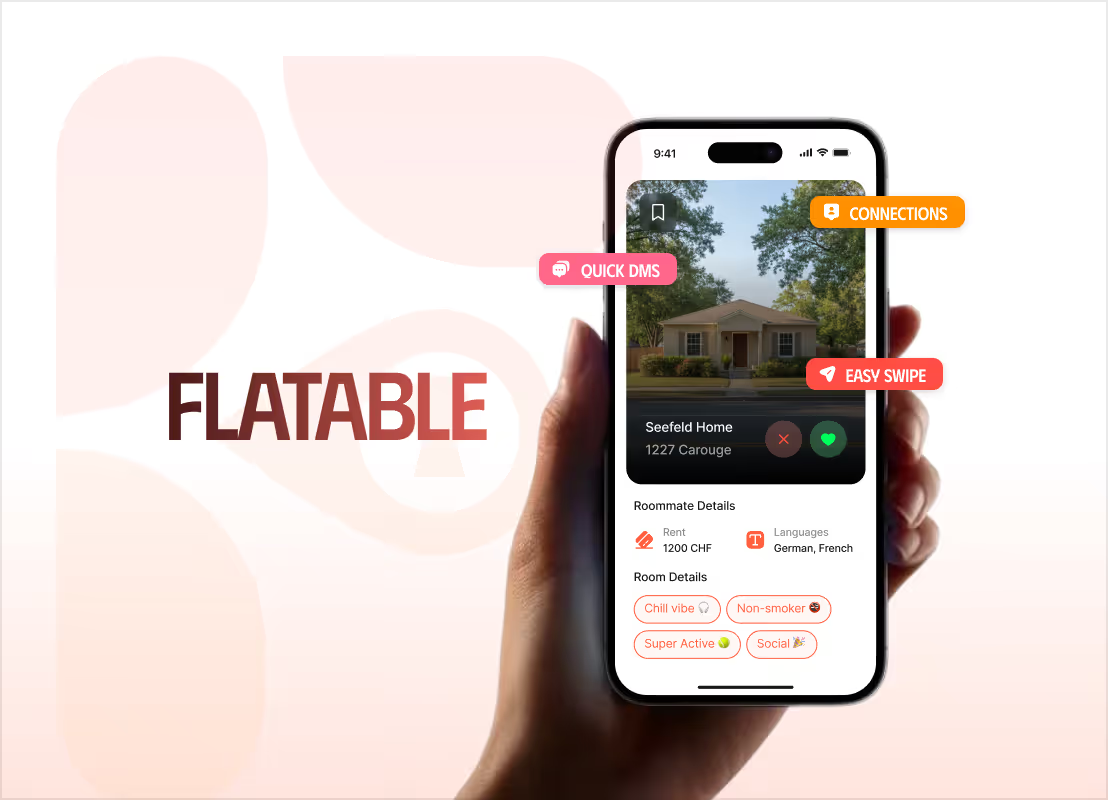
How We Made Flatable's Real Edge Impossible to Miss — at 95 on PageSpeed
Flatable doesn't just find rooms — it matches the people inside them. We rebuilt the experience around two distinct user journeys (seekers and providers), leaned into the product's real differentiator, and kept development moving in parallel with design using a dual-track agile approach. The final site is visually rich, tells the right story immediately, and scores 95 on PageSpeed on both desktop and mobile.
A Redesign That Cut Bounce Rate by 20% and Animation Load Time by 70%
Webless builds generative AI search that returns direct answers from massive content libraries. The technology was impressive. We rebuilt the brand from scratch, restructured the narrative around real use cases, and produced nearly 40 animation frames to make an abstract product instantly tangible. Time on page grew by 32%, bounce rate dropped by 20%.
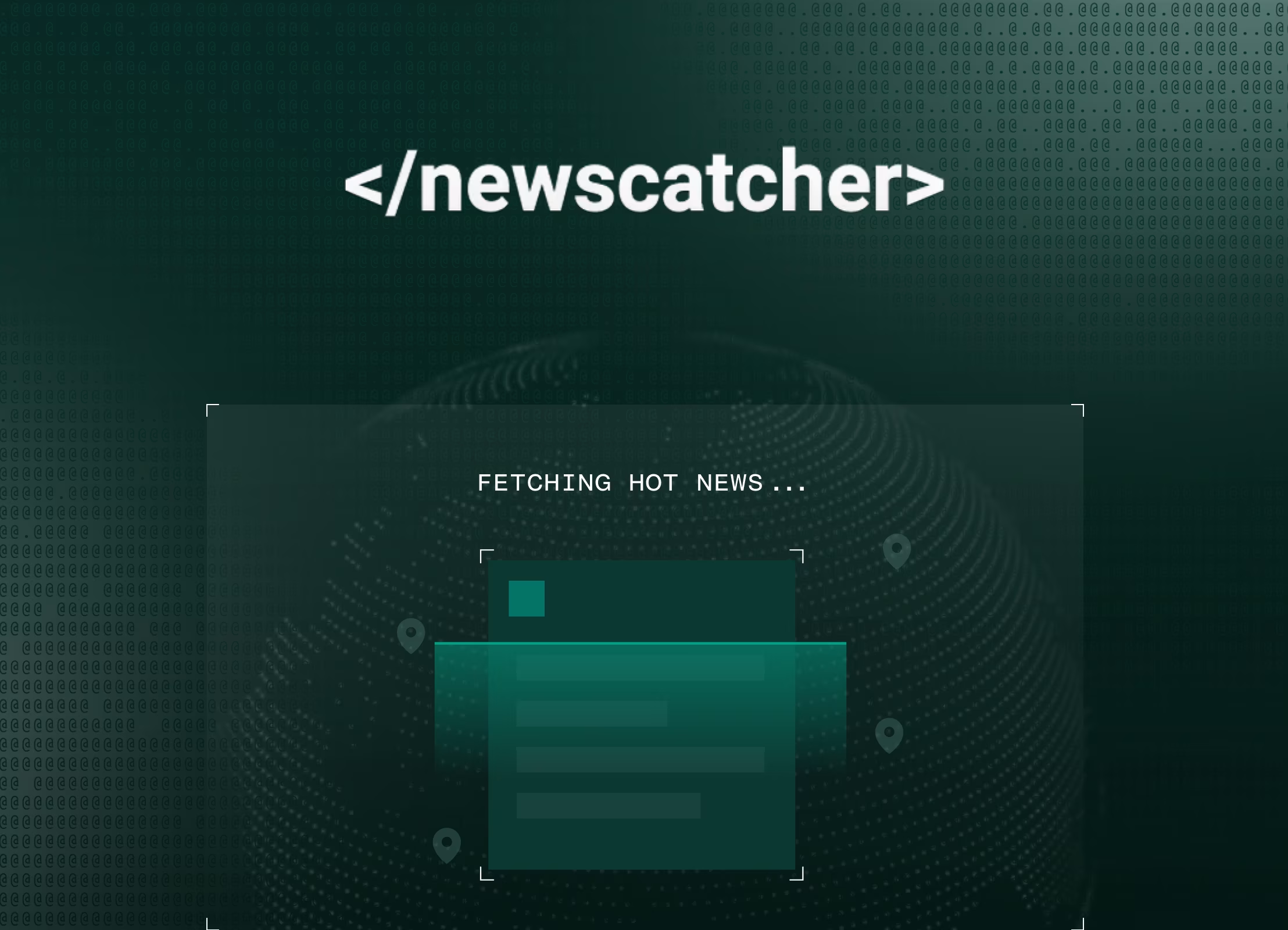
Increased session time from 20 Seconds to Over 3 Minutes: 3,600% More Engagement
NewsCatcher's APIs power enterprise news intelligence for teams at Samsung, US Department of State and major financial institutions — but a single-page site wasn't keeping pace with either the product or its buyers. With a continuous collaboration of over 2 years, and 2 complete rebuilds, we restructured the site around real use cases, built interactive Rive animations to explain complex NLP workflows, and matured the visual language for enterprise stakeholders. Session time grew from roughly 20 seconds to over 3 minutes.
A simple and comprehensive process that just works


.avif)

Figma → Webflow Translation
We start by mapping your Figma design system into a component-based Webflow development. All sections are standardized so your build stays consistent across every page.
Component-Based Architecture
Standardized, Consistent Sections

Technical Setup & Architecture
Before building, we define semantic structure, reusable patterns, and data flows to keep your system stable as new pages ship.
Semantic Layout Structure
Marketing Team Support

Workflow-Aligned CMS
We build CMS collections that fit the way you actually publish. We plan custom functionalities within your CMS and write custom code that a key part of our Webflow development services.
Custom CMS Functionalities
Marketing Team Support

Performance First Motion
We use GSAP for advanced interactions, Lottie and dotLottie for lightweight animations and product visuals, and Rive for state-based, interactive experiences.
GSAP Advanced Interactions
Interactive Rive Visuals

Clean Integration Setup
CRM syncing, event tracking, Memberstack flows, automation tools, all wired with clear data flow diagrams.
Event Tracking Setup
Standardized, Consistent Sections

Performance & SEO Foundations
Every build is optimized for speed and stability to achieve strong Lighthouse scores, with compressed responsive assets, clean class structures, and schema-ready foundations.
Compressed Responsive Assets
Schema-Ready Foundations

QA, Stress Testing & Launch
We test breakpoints, browsers, performance, forms, and SEO against a detailed checklist before launch—then deploy smoothly with DNS support and zero downtime.
Performance & SEO Checks
Zero-Downtime Deployment
You have more doubts ? Contact Us
Frequently Asked Questions
Many Webflow sites look fine at launch but become fragile as teams try to scale them, unnamed classes, inconsistent components, and structures that break when you add pages. We build as systems from day one: reusable components, semantic markup, clean CMS architecture, and documented patterns. The result is a site your team can confidently extend without creating technical debt.
Our default is Lumos. It scales cleanly across large sites, complex CMS setups, and growing teams, which keeps a site maintainable long after launch.
We're also fluent in Client-First and can work within other conventions if your existing site requires it.
Performance is part of the craft for us.. We optimize images, scripts, fonts, and animations as we build, and we test throughout rather than at the end. Most of our builds land strong scores across performance, accessibility, best practices, and SEO, often in the 90s, but the real goal is a site that feels genuinely fast for your visitors, not just a high number in a report.
We implement GSAP for complex scroll-based and timeline interactions, Lottie and dotLottie for lightweight product visuals and looping animations, Rive for state-based and interactive sequences, and Webflow-native interactions for transitions and reveals. Every animation goes through performance checks before launch, visual richness shouldn't come at the cost of load time.
Yes. When the product requires it, we write clean custom JavaScript, handle API integrations, build gated flows, set up webhooks, and manage logic that Webflow doesn't handle natively. Webflow is the foundation, it's not the ceiling.
We structure CMS collections around how you actually publish, not generic templates. That means collections reference each other correctly, fields are named and typed properly, and the content model scales as you add more.
We also write custom code where needed to support dynamic filtering, conditional rendering, or non-standard display logic.
Yes, if the foundations are sound. If the site uses a clean structure with consistently named classes and logical component patterns, we can extend or repair it. If the build is structurally messy, conflicting interactions, unnamed classes, nested overrides, rebuilding is usually faster and cheaper. We'll assess and give you a straight answer before committing.
Yes. The build is modular by design. Your team can update content, duplicate sections, add new pages, and publish without writing code. We provide Loom walkthroughs and structured documentation so updates feel straightforward.
A typical build runs two to five weeks once designs are final, depending on page count, animation complexity, CMS depth, and integrations. Simpler sites move faster; heavily animated or content-rich builds take longer. We give you a specific timeline at scoping and keep you updated as we go.
Shaping client stories with results
how we overcame real world complexities

1
Week Launch

Your360 AI came to us days before launch with a degraded Webflow build and no runway. We fixed responsiveness, unified interactions, and shipped a stable site just in time. Emergency support became an ongoing partnership — HubSpot, marketing updates, and performance tuning on-demand.
.webp)
20%
Bounce Rate Reduction
.avif)
TwoDots' AI tenant-screening platform had a demo page that didn't explain it. We streamlined the architecture and added a chat-simulation animation showing the screening flow in seconds. Bounce dropped ~40%, and sales started with context.

Tell us about your projectBook a freeconsultation
Trusted by the enterprise and growth teams Backed by
